Threads · Identification
The Complete Guide to Hydraulic Thread Identification
How to identify any hydraulic fitting thread with calipers and a pitch gauge — JIC, ORFS, NPT, BSP, metric, and the look-alikes that cause leaks.
Published July 6, 2026 · Last updated July 6, 2026 · By the A1 Hydraulic Power Solutions team
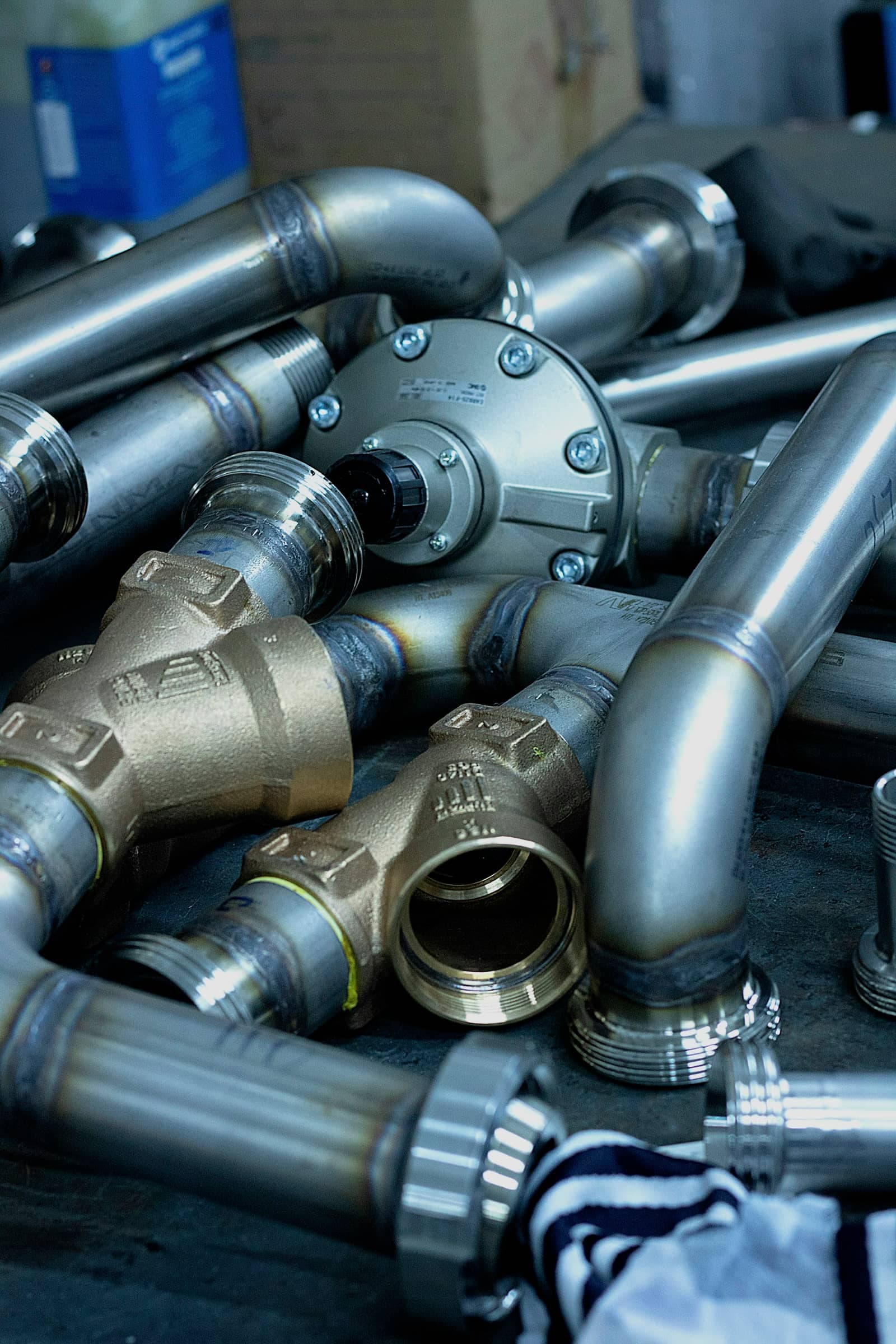
Half the leaks we see at the counter trace back to one moment: somebody looked at a thread, thought close enough, and wrenched it in. Hydraulic threads are a family of look-alikes — 55° and 60° flanks, 18 and 19 threads per inch, cones at 24°, 30°, and 37° — and "close enough" is precisely how a machine ends up weeping oil for the rest of its life.
Here is the identification method we use at the bench, with the tools and the traps.
The four-tool method
You need four things, and three of them fit in a shirt pocket:
- Calipers — to measure thread outside diameter (OD) on males, inside diameter on females.
- A thread pitch gauge — to count threads per inch (TPI) or measure metric pitch directly.
- A seat angle gauge — to distinguish 37° from 45°, 24° from 30°.
- A chart — because memory is how mistakes happen. Our thread identification guides carry the charts for every family below.
The method: identify the sealing method first, then the thread. The seal tells you the family; the measurements tell you the size.
Step 1: How does it seal?
Look at the business end before you measure anything.
| What you see | Sealing method | Likely families |
|---|---|---|
| Smooth internal cone, no O-ring | Metal-to-metal seat | JIC 37°, BSPP 60° cone, JIS 30°, DIN 24° |
| Flat face with O-ring groove | Face seal | ORFS, metric flat-face |
| O-ring above straight threads | Boss seal | SAE ORB, ISO 6149 metric |
| Tapered threads, no seat at all | Thread interference | NPT/NPTF, BSPT |
| Four-bolt flange head | O-ring on pad | SAE code 61 / code 62 |
That single observation eliminates most of the field. A fitting with a cone seat is never an ORFS. A tapered thread never belongs in a straight-thread port.
Step 2: Taper or parallel?
Put the calipers on the first thread and the sixth thread. Equal OD means parallel (JIC, ORFS, ORB, BSPP, metric); shrinking OD means taper (NPT, BSPT). This one check prevents the single most common mix-up in the trade — BSP vs NPT — because British and American pipe threads will happily start into each other and never seal.
Step 3: Measure and match
With family narrowed, measure OD and pitch and go to the chart. Two examples of why the chart matters:
- A 9/16-18 UNF thread is a JIC -6 and an ORFS -4 and an ORB -6. Thread size alone identifies nothing — the seal type you found in step 1 breaks the tie.
- M16×1.5 appears in the DIN light series as 10L and the heavy series as 8S. Only the tube OD and mating union settle it — see the DIN metric guides.
Step 4: Check the angle
Cone-seat fittings hide their last trap in the seat angle. JIC is 37°; automotive flare is 45°; JIS is 30°; BSPP swivels carry a 60° cone. Several of these share thread dimensions with each other, and a mismatched angle seals on a line of contact instead of a band — it holds at the bench test and weeps under impulse. An angle gauge costs less than the cheapest hose it will save.
The five mix-ups we fix most
- NPT into BSPT (and vice versa). 60° vs 55° flanks; 18 vs 19 TPI at 3/8". Starts fine, leaks forever.
- JIC male into an ORB port. Same UNF threads, no sealing surface. The port needs the O-ring boss form.
- ORFS with a missing O-ring. A flat face with no ring seals nothing. Replace the ring every assembly.
- BSPP treated as "weird NPT." Parallel British threads need their cone or washer — sealant paste is not a seal.
- Metric flat-face forced onto inch ORFS. Identical faces, incompatible pitches. Measure in millimeters before wrenching.
When to skip all of this
Bring the fitting to the counter. Gauging an unknown thread takes us about a minute, costs nothing, and comes with the right part off the wall — that is what the fittings and adapters stock is for. If the whole hose needs replacing anyway, spec the assembly online and let us match the ends from your photos.
The rule that survives all fifty years of this: identify, then buy. Every thread on that machine was chosen by an engineer, and the machine only stays sealed when the replacement respects the choice.
Put it to work.
Reading about it is half the job. For the other half, the counter is at 2201 Handley Ederville Road, Fort Worth — or start online.
 Lou Einstein