Portable power · Buying guides
Portable Hydraulic Power Units: A Working Buyer's Guide
How to spec a portable hydraulic power unit — pressure, flow, duty cycle, power source, and the details that separate a unit that works from one that survives.
Published April 6, 2026 · Last updated July 6, 2026 · By the A1 Hydraulic Power Solutions team
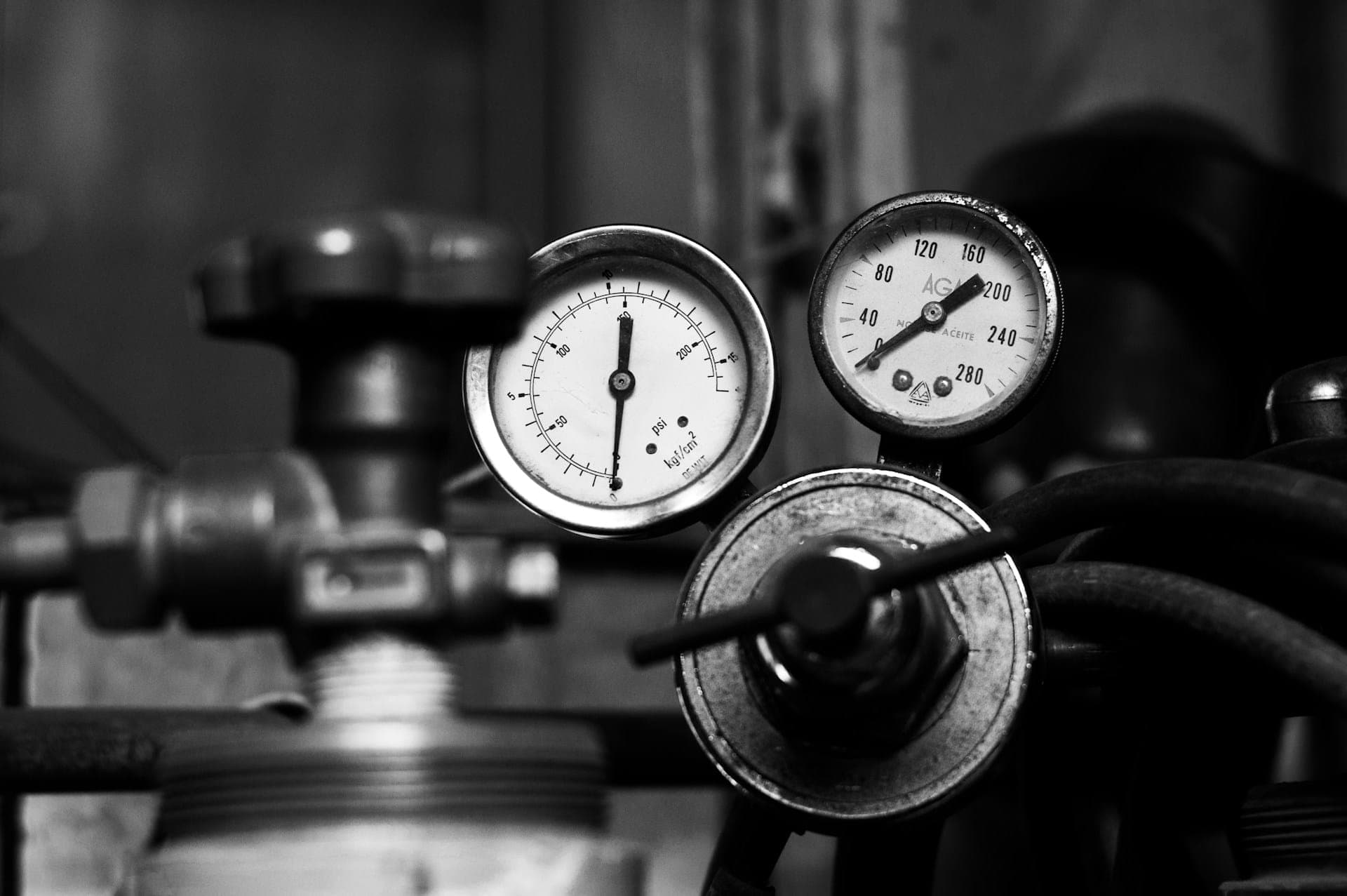
A portable hydraulic power unit (HPU) is a pump, a prime mover, a reservoir, and controls on a frame you can move — hydraulic muscle for wherever the plant power ends. Foundation crews drive rams with them; cable-injection and fiber crews run their machines off them; maintenance teams power torque wrenches and rescue-style tools. We build and service these units in Fort Worth, and this is the checklist we walk every buyer through.
Start with the tool, not the unit
The unit exists to satisfy the tool. Two numbers rule everything:
- Pressure (psi): what the tool needs to make force. Most industrial tools cluster at 1,500–3,000 psi; jacking and some ram systems run 10,000 psi and want jack-rated hose.
- Flow (GPM): what the tool needs to make speed. Cylinder speed and motor RPM scale directly with it.
Pressure × flow sets input power: HP ≈ (psi × GPM) ÷ 1,714. A tool wanting 5 GPM at 2,000 psi needs about 6 real hydraulic horsepower — call it an 8+ HP engine once losses join in. A buyer who knows those two numbers has done 80% of the spec.
The classic mistake is buying pressure when the problem is flow. A cylinder that moves too slowly needs GPM; more psi just waits harder. Match both numbers to the tool's plate, and when two tools must run together, add their flows.
Duty cycle decides the reservoir
Hydraulics turns inefficiency into heat, and heat lives in the reservoir. Intermittent duty (jacking, occasional cycling) lives fine with a compact tank. Continuous duty — cable injection is the poster child — wants a reservoir sized generously (the old rule: tank gallons ≈ 1–3× pump GPM, leaning higher for hot Texas summers) or a cooler. An undersized tank announces itself in August: varnished oil, cooked seals, and a pump that ages in dog years.
Power source, briefly
- Gasoline — the field default. Nothing to plug in; needs the usual engine care.
- Electric (single- or three-phase) — quiet, indoor-safe, and the right answer anywhere power exists.
- Diesel / PTO — for big flow or where the truck is already the power plant.
Match the source to where the unit actually spends its life, not to the loudest opinion in the yard.
The details that separate builders
Any catalog can match pressure and flow. Longevity hides in the boring parts:
- Relief valve set and verified to the tool's rating — with a gauge on the unit so anyone can check it. (Our units get glycerin-filled gauges; dry gauges shake themselves unreadable.)
- Suction plumbing done right — short, fat, helix-reinforced, no elbows it doesn't need. Cavitation is a self-inflicted wound.
- Return filtration with a service indicator, because contamination is the number-one killer of everything downstream.
- Couplers your tools already use — usually flat-face for clean connects or ISO 7241-A poppet for ag-pattern tools. Mixed coupler fleets waste an astonishing amount of crew time.
- A frame built for the truck it rides in, with the gauge and filler where a human can reach them.
Buy, build, or repair?
Off-the-shelf units fit off-the-shelf jobs. The crews that come to us usually don't have one of those: they need a specific flow at a specific pressure, in a footprint that fits a specific trailer, with couplers matching a specific tool fleet. That's a built unit — ours are specced, assembled, and tested in Fort Worth, then supported by the same bench afterward.
And if you already own a tired unit: pumps, valves, hoses, and controls on portable HPUs are standard hydraulic components. A pump diagnosis and a re-hose often return a unit to service for a fraction of replacement.
The two-minute spec sheet
Bring us these and the quote practically writes itself:
| Question | Your answer |
|---|---|
| Tool(s) and their psi / GPM | |
| Run time per hour (duty cycle) | |
| Power available (gas / 120V / 240V / 3-phase / PTO) | |
| Where it rides (truck bed, trailer, cart) | |
| Coupler style on existing tools |
Send it through the quote form or call the counter — either way, the unit that comes back is built for your job, not for a catalog page.
Put it to work.
Reading about it is half the job. For the other half, the counter is at 2201 Handley Ederville Road, Fort Worth — or start online.
 Lou Einstein