Safety · Hoses
Working Pressure, Burst Pressure, and the 4:1 Safety Factor
What hydraulic hose ratings actually mean, why the 4:1 design factor exists, how impulse spikes eat into it, and why the fitting — not the hose — often sets the real limit.
Published March 16, 2026 · Last updated July 6, 2026 · By the A1 Hydraulic Power Solutions team
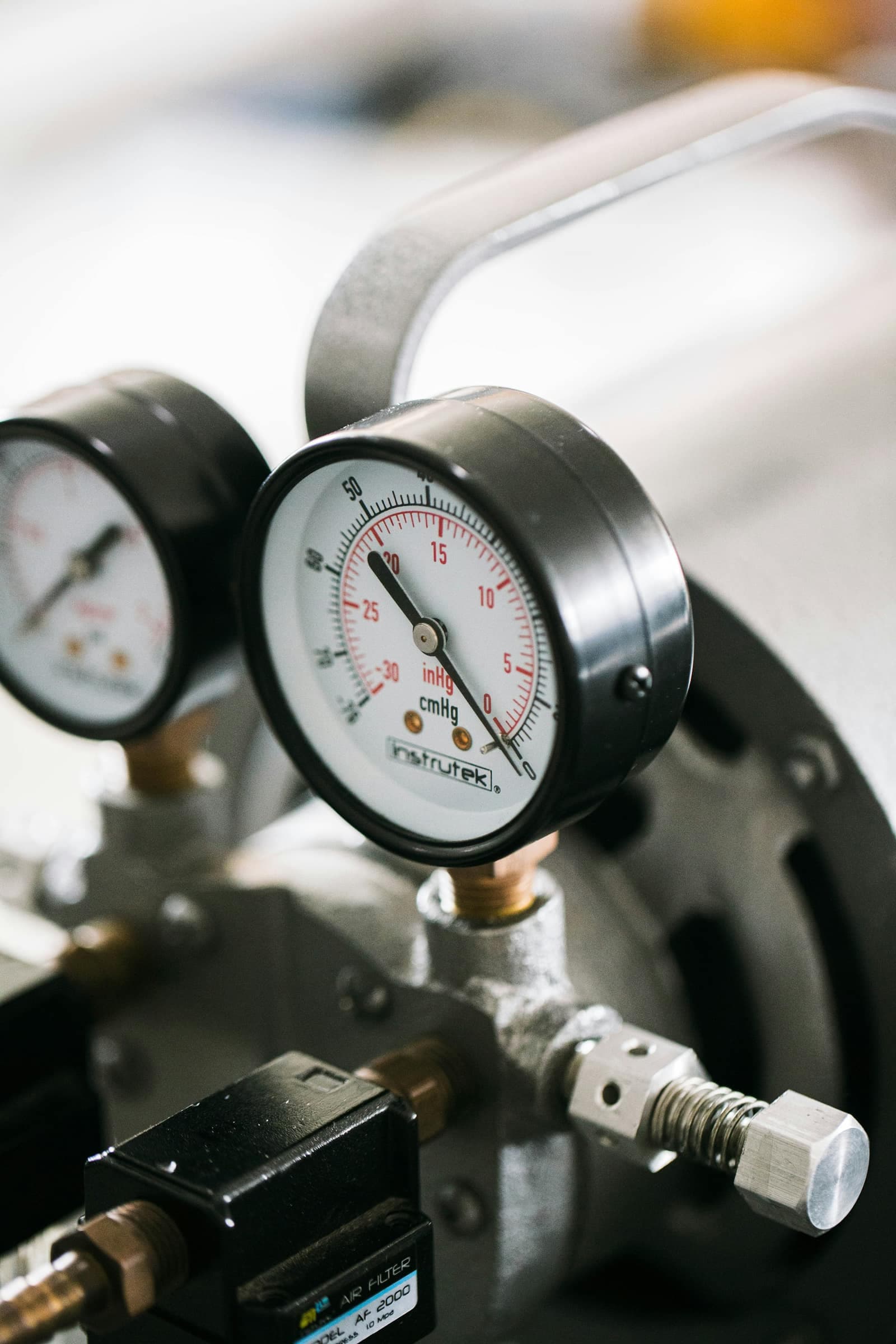
Every hydraulic hose carries two pressure numbers, and confusing them is how people get hurt. Working pressure is the maximum the hose is designed to run at, all day, for its whole service life. Burst pressure is a laboratory destruction number — the minimum pressure at which a new sample must fail in testing. For hydraulic hose standards, burst is at least four times working pressure. That ratio is the 4:1 safety factor, and understanding what it does (and doesn't) cover is the heart of hose safety.
What the 4:1 factor is actually for
A new hose bursting at 4× WP sounds like enormous margin. It isn't slack — it's a budget, and the system spends it constantly:
- Impulse spikes. Every valve closure and load reversal fires a pressure transient through the circuit. Spikes routinely exceed gauge pressure by 30–150%; a gauge reading 3,000 psi can hide 5,000+ psi hammer events too fast for the needle.
- Aging. Heat cycles, flexing, and oil exposure quietly reduce a hose's real burst strength every month it's in service. The 4:1 was measured on a new hose.
- Assembly realities. Minor routing sins, small twists, marginal bend radii — each one borrows from the margin.
Design the circuit so working pressure covers the spikes, not just the gauge reading, and the 4:1 stays intact to absorb what you didn't predict. Systems with severe hammer (breakers, presses, long runs with fast valves) deserve spike measurement or simply a higher-rated hose family — this is much of why spiral hose exists.
The rating belongs to the assembly, not the hose
Here's the part that surprises people: crimp a 6,000 psi hose to a 3,000 psi-rated end and you own a 3,000 psi assembly. The lowest-rated component governs. That includes:
- Fittings. Code 61 flange heads rate 3,000–5,000 psi by size; code 62 is the 6,000 psi series. Same idea across thread families.
- Adapters. Every adapter in the path is a component with its own rating.
- Quick disconnects. Often the quiet weak point — many poppet couplers rate well below the hose they're plugged into.
And size matters twice: within most hose families, working pressure falls as bore grows. A -16 R2 is a 2,400 psi hose even though the -4 in the same family carries 5,800. Check the chart at your size, every time; the dash-size post covers this trap in detail.
Why hose is never repaired
A damaged hydraulic hose is replaced as a complete assembly — never spliced, patched, or "re-crimped a little shorter past the bulge." There is no field repair that restores a reinforcement ply. This is the industry's brightest line, and any counter that offers otherwise is offering you shrapnel futures.
The same logic covers pinhole leaks: never search for one with your hand. Oil at 2,000+ psi through a pinhole is an injection injury — a medical emergency that looks like a bee sting for the first few hours. Cardboard finds leaks; skin pays for them.
A worked example
An excavator auxiliary circuit runs 4,200 psi at the gauge and hammers when the breaker fires.
- Gauge says 4,200 → R12's 4,000 psi constant is already insufficient. No debate.
- Breaker impulse duty → spiral construction mandatory, and spike allowance wanted.
- Choice: R13 (5,000 psi) if the spikes are managed, R15 (6,000 psi) if we're honest about breakers.
- Ends: 6,000 psi circuit → code 62 flange heads, interlock series, from the 6-spiral fittings wall.
The assembly that comes off our crimper gets its crimp diameter verified against spec — because the best-chosen hose still depends on the joint being right.
The counter rules, condensed
- Working pressure covers spikes, not just the gauge.
- The assembly rates at its weakest component — check fittings and couplers, not just hose.
- Ratings drop as bore grows. Read the chart at your size.
- Damaged hose = new assembly. Always.
- Never hand-search a pinhole leak.
If any number on your circuit is a guess, that's what we're for: send the spec or bring the old assembly, and we'll put real ratings on every component in the chain.
Put it to work.
Reading about it is half the job. For the other half, the counter is at 2201 Handley Ederville Road, Fort Worth — or start online.
 Lou Einstein